
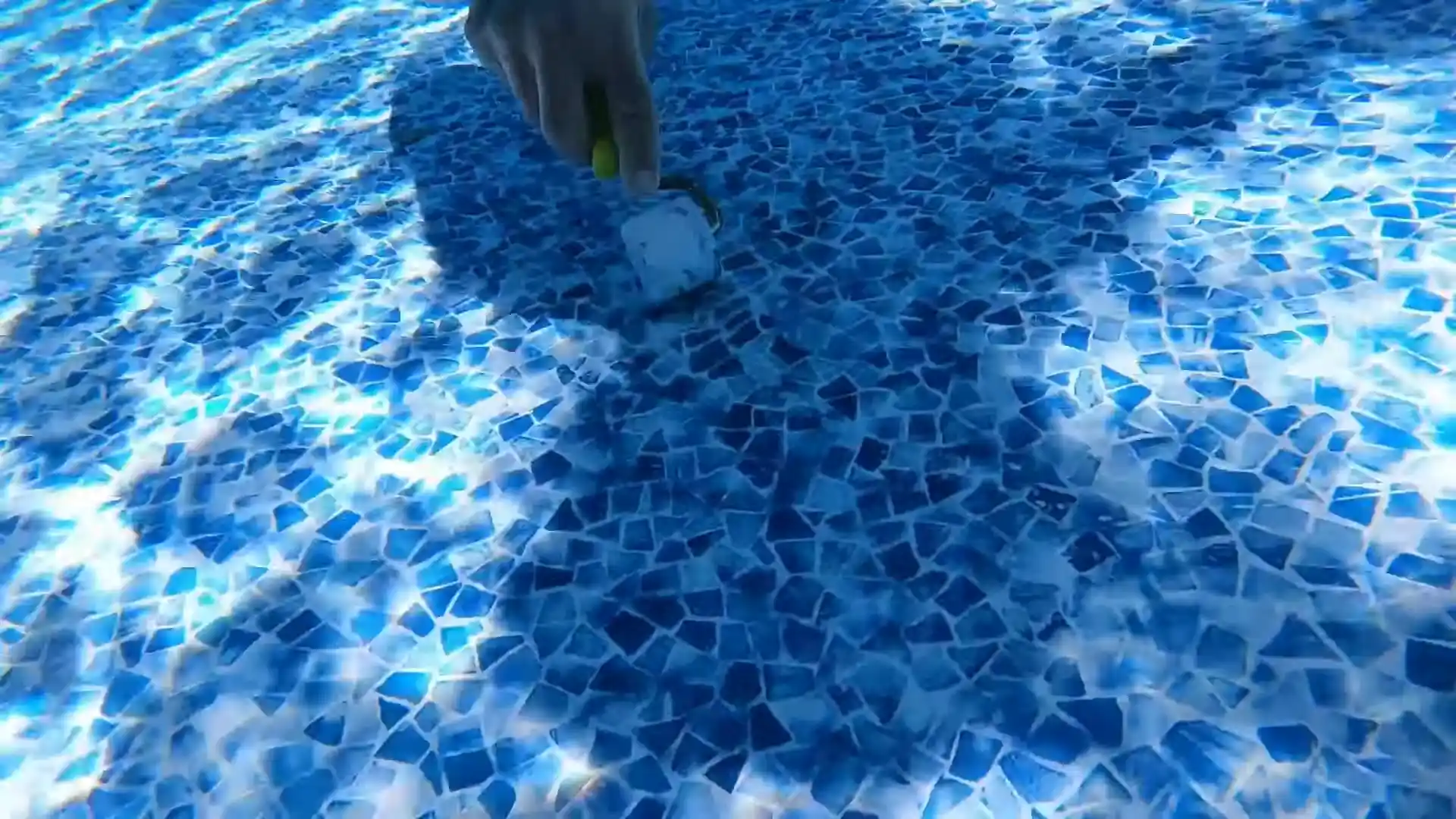
Here is a scene from a South Compton backyard last summer. The homeowner had been topping off the pool every three days, blaming July heat, until the water bill arrived and settled the argument. He ran the bucket test that night: a bucket on the second step, filled to match the pool level, pump off. Two days later the pool had dropped an inch past the bucket line. Evaporation takes from both equally. Only a leak takes from the pool alone. He called us the next morning, and by that afternoon a dye trace had found the failure at a return fitting, invisible from the deck.
Start with the bucket, then let us narrow it
The bucket test is the right first move, and it is free. Run it twice: once with the pump on, once with it off. Losing more water with the pump running points to the pressurized plumbing, the return lines and equipment loop. Losing the same amount either way points to the shell, the fittings, or the skimmer. That single distinction cuts our search in half before we arrive. Compton's mild marine-layer climate helps too: with January lows around 47 to 50 degrees and no freeze, local pools run year-round, so a leak here never gets a winter pause to hide behind.
How we pinpoint the loss
Pool leaks split into two families, and we test for both in one visit. For plumbing, we isolate and pressure-test each line: suction, returns, the spa loop if there is one, and the main drain run. A line that will not hold pressure gets traced with acoustic gear or tracer gas to the exact break point under the deck or lawn. For structure, we dye-test the usual suspects: skimmer throat, return fittings, light niche, main drain, and any visible cracks. Vinyl and fiberglass get their own methods. Full-depth gunite pools with suspected structural loss are tested at multiple levels, because a leak stops losing water once the level drops below it, and that stopping point is itself a clue.
Repairs that match the finding
A failed return fitting is resealed or replaced from the pool side, no digging. A cracked skimmer throat gets epoxy-injected or the skimmer replaced. A broken underground return is excavated at the marked point, not along the whole run, and repaired in a single opening. Where the pool itself is fine but the attached spa keeps dropping, the spa's own plumbing loop gets isolated and tested separately, because shared equipment hides which vessel is actually losing. And for buried structural work on gunite shells, our inground pool service covers the deeper diagnostics: main drains, floor returns, and shell cracks below the tile line.
Do not overlook the equipment pad
A surprising share of pool losses never touch the pool. The equipment pad concentrates joints, unions, valves, and pump seals in one place, all of them cycling between pressure and rest every day. A pump shaft seal that weeps only while running, a filter tank o-ring that sprays a fine mist, a multiport valve passing water silently to waste: each mimics a mystery leak while hiding in plain sight. We inspect the pad both running and idle, because half of these failures are invisible in whichever state the homeowner happened to check. Pad repairs are usually the cheapest fix in pool work, which makes them the best possible answer to a bucket test that came back positive.
What a pool leak costs in Compton specifically
Water here is metered by the city's own utility, and a modest pool leak of 500 gallons a day quietly adds real money to a bimonthly bill before anyone notices the level. The escaped water does local damage too: on this flat coastal plain it does not run off, it soaks in beside the shell, and saturated soil under a deck settles and cracks it. Homes across South Compton's pool-heavy blocks generate most of our calls, and the pattern repeats: the earlier the trace, the smaller the repair. Call (424) 544-0235 with your bucket test result and we will take it from there.
Topping off the pool more than once a week?Dispatch answers 24/7. Written quote before any work.
✆ (424) 544-0235Pool leak questions from Compton backyards
How much water loss is normal evaporation here?
In Compton's marine-moderated climate, figure roughly a quarter inch a day in summer, less when humidity is up or the pool is covered. Losses beyond half an inch a day, or any loss that outpaces a bucket test, point to a leak.
Can you find a leak without draining the pool?
Almost always. Pressure testing, dye tracing, and acoustic work are all done with the pool full. Draining is a last resort, and in older gunite shells it can create problems worse than the leak.
The pool only loses water with the pump running. What does that mean?
That pattern points at the pressurized return plumbing or the equipment loop rather than the shell. It is actually good news: line leaks are usually cheaper to repair than structural ones.
Is a wet spot in the lawn near the equipment pad significant?
Very. On flat ground, escaped pool water surfaces close to the failure. A persistently soggy strip between pool and pad is a strong marker for a broken underground line and usually shortens our trace considerably.