
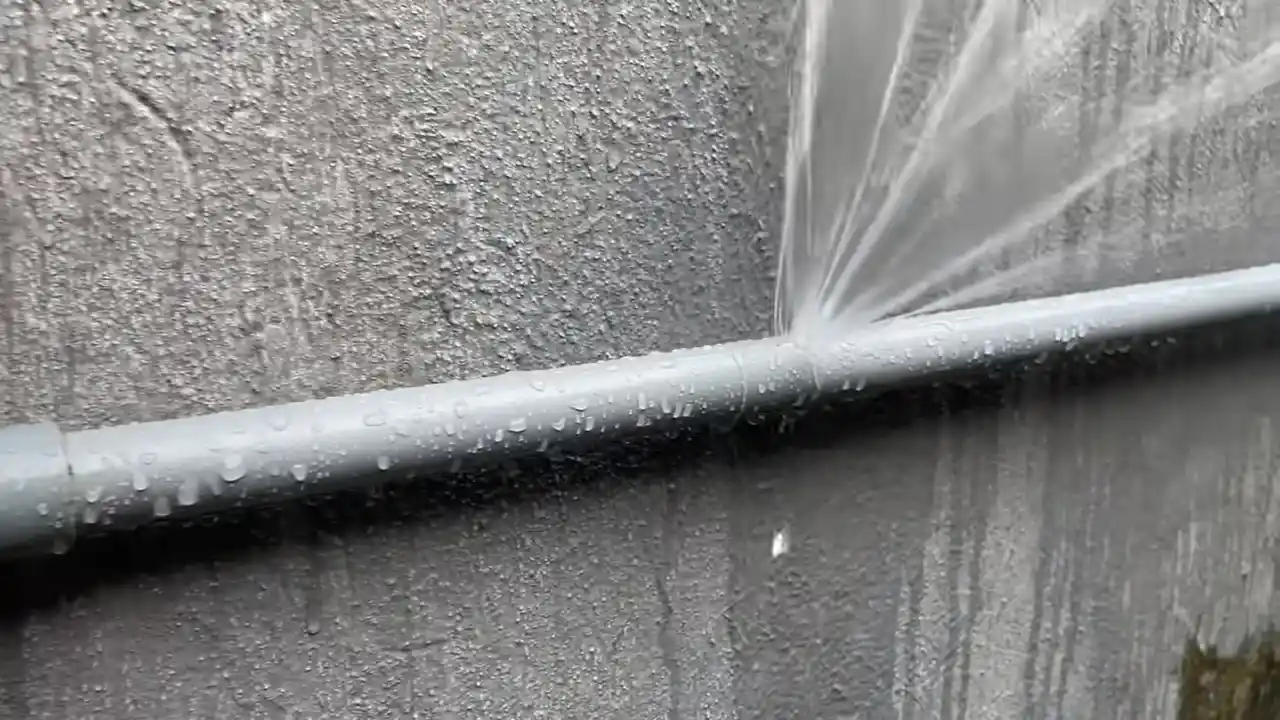
Compton's own city wells pull some of the hardest water in California from the Central Basin. The city's water quality reporting puts it at 6.5 to 15 grains per gallon, moderately hard to very hard, and some independent analyses have measured local samples higher still. That mineral load comes out of an aquifer built from the LA Basin's ancient marine sediments, and it has been flowing through the same copper pipes since the post-war tracts went in. Sixty to eighty years of calcium, magnesium, and shifting disinfection chemistry, chlorine from the wells and chloramine when imported MWD water blends in, work on copper from the inside. The result is pitting corrosion: tiny craters that deepen year by year until one breaks through as a pinhole.
Why a pinhole is worse than it sounds
A hole the width of a pin does not flood a house. It mists. Pressurized water escapes as a fine spray inside a wall or above a ceiling, soaking insulation and framing for weeks before a stain shows. By the time paint bubbles, the drywall behind it is saturated and the framing may be growing mold. Worse, pitting is systemic. Copper that has thrown one pinhole has usually thinned in a dozen other places, which is why the second and third leaks tend to follow within a year or two. The question a pinhole raises is never just where the hole is. It is how much life the rest of the system has left.
Finding a leak you cannot see or hear easily
Pinholes are the quietest pressurized leaks we chase. The escape noise is faint, so we lean on layered methods: moisture mapping to bound the wet zone, thermal imaging to catch the temperature signature on hot lines, acoustic amplification at close range, and tracer gas when a leak is too small to hear at all. We open drywall only at the confirmed point, typically a hand-sized inspection hole rather than a demolished wall. Once exposed, the pipe itself testifies: green-blue staining, a crusted deposit at the exit point, and pitting visible along the run.
Repair the hole, or retire the pipe
An isolated pinhole in otherwise sound copper gets a clean section replacement, not a clamp. We cut back to bright metal and braze in new pipe. But when the exposed run shows widespread pitting, patching becomes a treadmill, and we say so. The honest options are a targeted replacement of the worst copper runs in the system, or a full changeout. For homes on their second or third pinhole, a whole-house repipe is usually cheaper over five years than the drywall, paint, and emergency calls that repeat failures generate. The same water that pits pipe also destroys tanks, so pinhole calls often end with a hard look at the water heater on the same visit.
Where Compton's pinholes cluster
The geography is predictable because the housing eras are. The 1940s to 1960s tracts carry original copper now deep into pitting age: Rosewood's post-war blocks, Leland, Sunny Cove, and the wide stretches of West and East Compton. Pre-war homes near Downtown often escaped, not because their water is softer but because their galvanized supply lines fail differently, by rust and pressure loss rather than pinholes. Newer PEX-era construction near Cressey Park barely registers on our pinhole map. If your home was built between 1945 and 1970 and still has its original supply lines, pitting is not a possibility. It is a schedule.
What early action saves
Caught at the first stain, a pinhole costs a section of pipe and a patch of drywall. Caught at the third recurrence, it costs ceilings, flooring, mold remediation, and an insurance claim. The meter test takes minutes and the inspection is priced upfront. Call (424) 544-0235 the day you notice the stain, not the month after.
Green stain on a fitting or a damp patch you cannot explain?Dispatch answers 24/7. Written quote before any work.
✆ (424) 544-0235Pinhole leak questions from Compton homeowners
Why does Compton copper pit faster than neighboring cities?
The city pumps roughly 80 percent of its supply from its own 8 Central Basin wells, and that deep groundwater carries a heavier mineral load than the mostly imported blends many neighbors buy. Decades of that water, plus alternating chlorine and chloramine disinfection, accelerate pitting in aging copper.
Can I just put a repair clamp on a pinhole?
A clamp is a roadside patch, not a repair. It buys days, sometimes weeks, while pressure works on the thinned metal around it. We replace the failed section back to sound pipe so the fix outlives the wall we close.
Does a water softener stop pinhole leaks?
Softening reduces the scale side of the problem and can slow further pitting, but it cannot restore metal already lost. Copper that is actively failing needs repair or replacement first; treatment is a follow-up conversation, not a fix.
How many pinholes before a repipe makes sense?
Our rule of thumb: the second pinhole in two years means the system is telling you something, and the third settles the argument. At that point repair money is better spent retiring the copper than chasing it.