
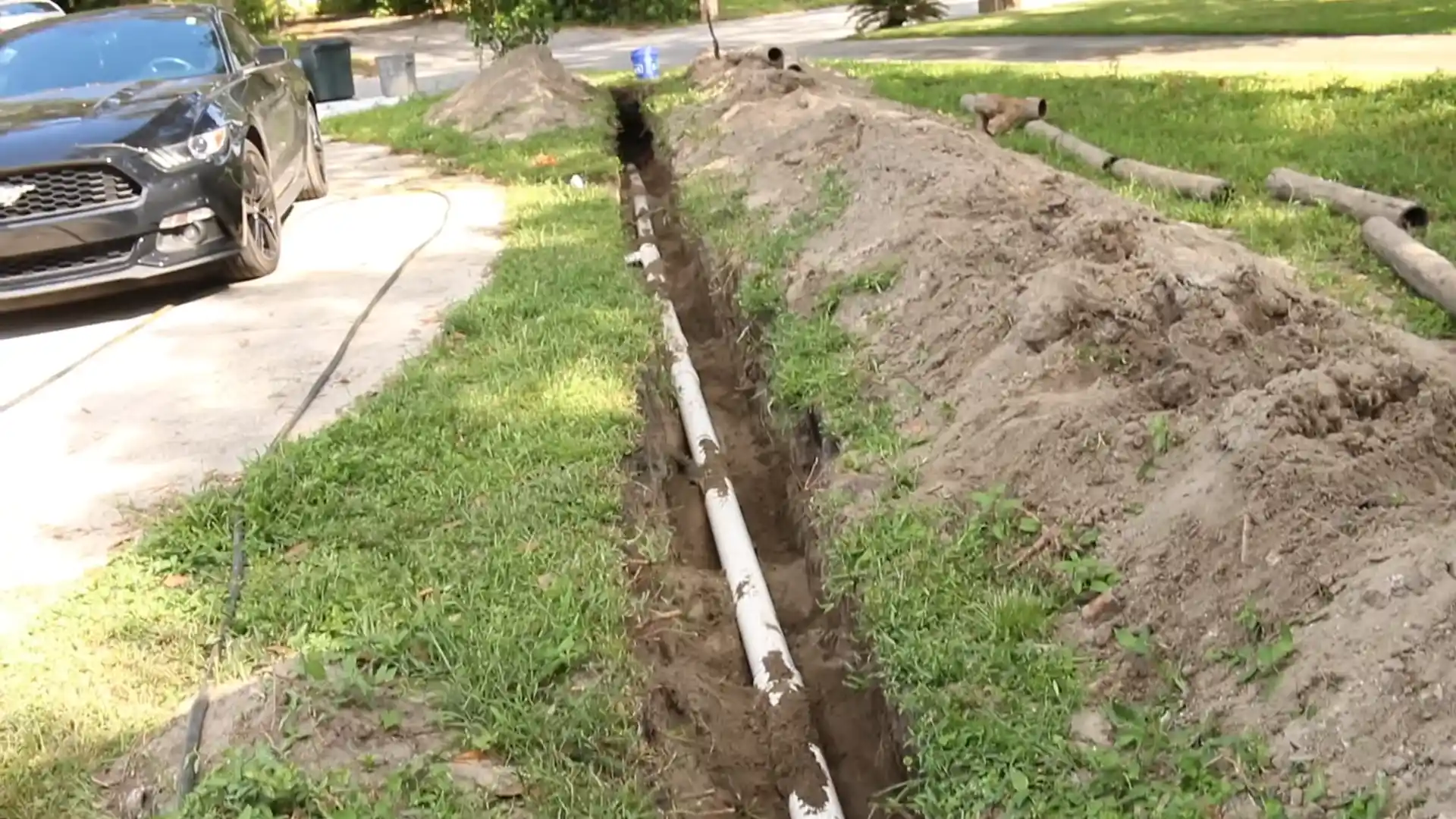
Compton incorporated in 1888, the 8th city in Los Angeles County to do it, and pieces of its underground still date to eras most cities never had. Cast iron and vitrified clay sewer laterals installed before the war are still carrying wastewater under the blocks around Downtown and the older streets of North Compton. Cast iron rusts from the inside; clay cracks at its joints and invites roots. Either way, an 80-year-old lateral does not fail loudly. It seeps, and the evidence surfaces slowly: a stubbornly green stripe of lawn, a sunken patch of soil, a sewer odor that comes and goes with the weather.
The camera goes in before the shovel
Every sewer diagnosis here starts with a high-resolution camera run from the cleanout to the city connection. We record the footage, log the distance to each defect, and locate it from the surface with a sonde, so you see exactly what we see: a root mass at a clay joint, a rust-through channel in cast iron bottom, a bellied section holding water, or an offset where soil movement pulled a joint apart. On suspected leaks without visible defects, a hydrostatic test confirms whether the line holds water at all. The written findings and the marked spot on your lawn come before any repair conversation.
Dig, or no dig: how we choose
Not every lateral needs a trench across the yard. Where the host pipe keeps its shape, trenchless assessment and repair methods let us line or burst the old pipe through two small access pits. Cast iron with a rotted bottom channel, or clay crushed out of round, needs conventional excavation of the failed section. Roots at a single joint often resolve with a spot repair and a root barrier rather than full replacement. The camera footage decides, not a sales script. Because a leaking lateral and a slow interior line produce similar symptoms, we also check whether the real problem is a failing drain inside the house before quoting yard work you might not need.
Local rules and local dirt
In Compton the property owner is responsible for the lateral from the house to the public main, and repairs there involve permits and inspection through the city, with the LA County Sanitation Districts handling regional treatment downstream. We pull those permits when the scope requires them. The digging itself is shaped by coastal-plain soil: soft alluvium excavates easily but slumps, and the high water table in low-lying spots near Compton Creek can put groundwater in a deep trench, so we shore and dewater accordingly. Homes along the older streets of North Compton sit squarely in the pre-war lateral cohort and account for many of our full-replacement jobs.
What the written camera report includes
Every inspection leaves you with evidence, not just an opinion. The report includes the recorded video file, a defect log with the distance from the cleanout to each finding, surface locate marks for anything that needs repair, the pipe material and diameter as observed, and a plain-language condition summary: sound, serviceable with a spot repair, a lining candidate, or replacement due. If you are buying or selling a home in Compton's older neighborhoods, that document does real work in escrow, because a pre-war lateral is one of the most expensive surprises a buyer can inherit. And if the defect sits past your property connection, the footage gives you standing to put the repair where it belongs, on the city's side of the line.
Why a seeping lateral cannot wait
Wastewater exfiltration undermines soil from below. Left alone, the void grows until a walkway settles, a driveway cracks, or the lateral itself collapses and backs sewage into the lowest drain in the house, usually a shower. It also feeds roots, which return each season stronger. A camera inspection costs a fraction of an emergency dig and tells you the truth about your line's remaining life. Call (424) 544-0235 and get the footage on record.
Sewer smell in the yard or drains that gurgle after every flush?Dispatch answers 24/7. Written quote before any work.
✆ (424) 544-0235Sewer lateral questions from around the Hub City
How do I know if the leak is my lateral or the city main?
The camera settles it. Defects between your house and the property-line cleanout are the owner's responsibility; problems past the connection belong to the city, and we document them so you can report it with evidence.
Do roots in the line mean the whole lateral is bad?
Not necessarily. Roots enter at specific joints, and a single intrusion in otherwise sound pipe is a spot repair. Roots at every joint in old clay usually mean lining or replacement is the economical answer.
Is trenchless repair possible with old cast iron?
Often, yes. If the pipe holds enough shape for a liner to seat, we can rehabilitate without a full trench. Cast iron with a rusted-out bottom usually cannot host a liner and needs the failed run excavated.
What does the sewer smell in my yard actually mean?
Odor plus soggy or sunken ground along the lateral path is classic exfiltration: wastewater escaping a cracked pipe below. It merits a camera inspection promptly, before the soil above the defect settles further.