
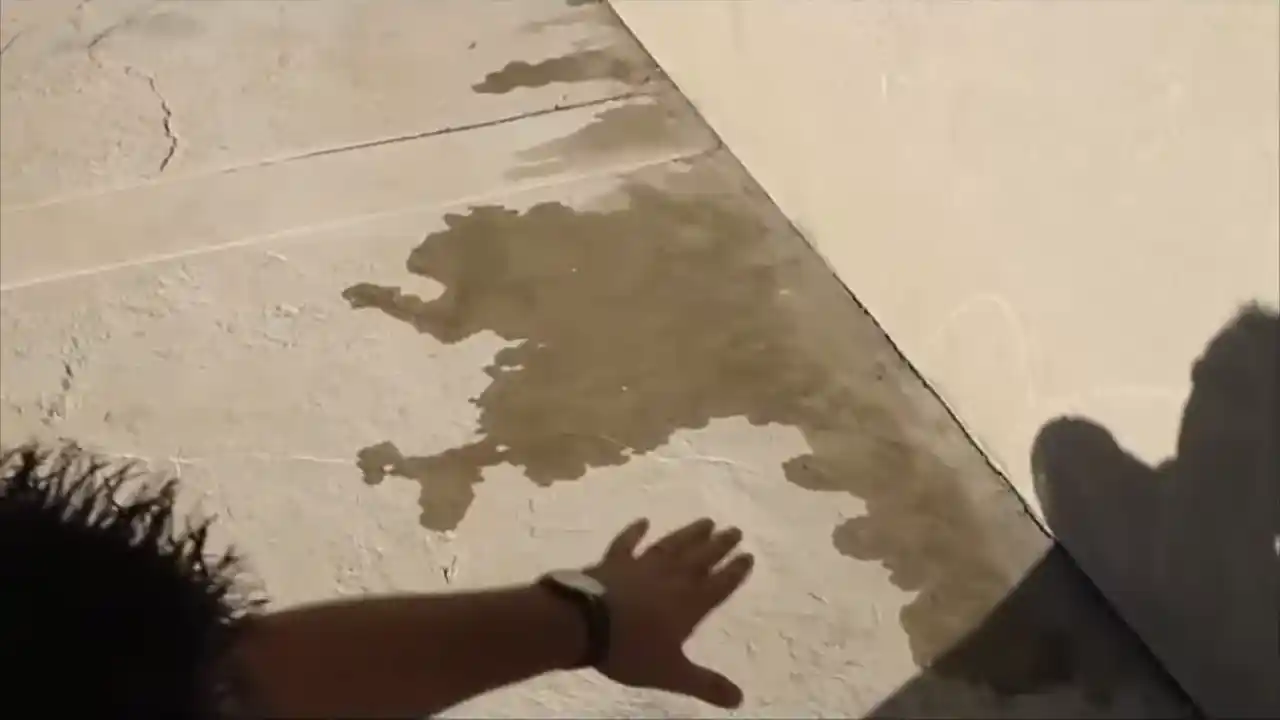
Compton sits close to the Newport-Inglewood Fault Zone, the fault that produced the 1933 Long Beach earthquake. Big quakes are rare, but the ground here never fully holds still, and decades of small movements work on the copper lines cast into slab foundations across this flat coastal-plain city. Pipe rubs against concrete, joints flex, and the city's mineral-heavy well water corrodes the metal from the inside at the same time. Sooner or later one of those lines opens under the slab, and the first evidence is usually indirect: a warm hallway floor, a water bill that climbed for no reason, or the faint sound of running water in a silent house.
How we locate a leak under concrete
Nothing gets cut until the leak is found. We start at the meter, confirming loss with every fixture off, then isolate the hot and cold systems under pressure to establish which side is failing. From there, acoustic listening equipment traces the escape noise through the slab, and a thermal camera maps the heat plume when the hot side is involved. On stubborn, quiet leaks we charge the line with tracer gas and follow it to the surface. The result is a mark on your floor, accurate to a few inches, before any concrete opens.
Repair options, in plain terms
Three paths cover nearly every slab leak, and the right one depends on the pipe's age and condition, not on what is easiest to sell.
- Spot repair. One clean opening over the marked point, cut out the failed section, braze in new pipe, patch the slab. Right for isolated failures in otherwise sound copper.
- Reroute. Abandon the buried run and carry a new line overhead through walls and attic. Right when a line has failed more than once or runs beneath finished flooring you want untouched.
- Repipe. When a post-war system is throwing leaks in multiple runs, patching becomes a subscription. We will say so honestly and price the full replacement.
Because a slab failure can also let moisture migrate under footings, we check the surrounding stem wall and, where the evidence points that way, recommend a closer look at the foundation itself before closing up.
Why Compton slabs leak more than most
Three local facts stack the odds. First, age: this is an 1888 city, and the big residential tracts poured through the 1940s to 1960s carry original copper now 60 to 80 years old. Second, water: the City of Compton pumps about 80 percent of its supply from 8 city-owned Central Basin wells, and the city's own reporting puts hardness at 6.5 to 15 grains per gallon. That calcium and magnesium load drives the same corrosion behind the pinhole failures we chase through aging copper all over town. Third, geology: soft alluvial soil, a high water table on the low coastal plain, and steady seismic micro-movement from the Newport-Inglewood system. Homes in West Compton's post-war blocks combine all three, and they make up a large share of our slab calls.
What to do in the first hour
If you suspect an active slab leak, three moves protect the house before we arrive. First, find your main shutoff where the supply enters the house and confirm it actually turns; decades-old gate valves in post-war tracts often seize, and the meter box valve at the sidewalk is the backup. Second, if the floor is warm, mark the boundary of the warm zone with painter's tape while it is detectable, because that outline speeds our trace. Third, note the meter reading and the time. A second reading an hour later, with everything off, gives us a flow rate before we even open the truck. None of this is required, but callers who do it usually shave an hour off the visit.
What a slab leak costs you by waiting
A pressurized line loses water every second. That shows on the utility bill first, then in the structure: saturated base soil, lifted vinyl and warped laminate, efflorescence on the slab edge, and eventually mold in wall cavities. Early detection keeps the fix at one opening and one day. Waiting converts a plumbing repair into a flooring and drywall project. If you suspect a slab leak, call (424) 544-0235 and stop guessing; the meter test alone takes us minutes and settles the question.
Warm spot on the floor or a bill that will not come down?Dispatch answers 24/7. Written quote before any work.
✆ (424) 544-0235Slab leak questions from Compton homeowners
What does slab leak detection cost in Compton?
Most single-family detections fall in a few-hundred-dollar range depending on slab size and access, and we quote the exact number before starting. If we perform the repair, detection is typically credited toward it.
Will you have to jackhammer my floor?
Only at the marked leak point, and only after you approve the plan. A typical spot repair opens roughly two square feet of concrete. Reroutes often need no slab cutting at all.
Does homeowners insurance cover a slab leak?
Policies commonly cover the resulting damage and the access work, while the failed pipe itself is often excluded. We document the leak location, cause, and moisture readings so your adjuster has what they need.
Hot water heater runs constantly. Slab leak?
A hot-side slab leak forces the heater to reheat around the clock, so yes, that pattern fits, especially paired with a warm floor patch. A pressure isolation test confirms it quickly.