
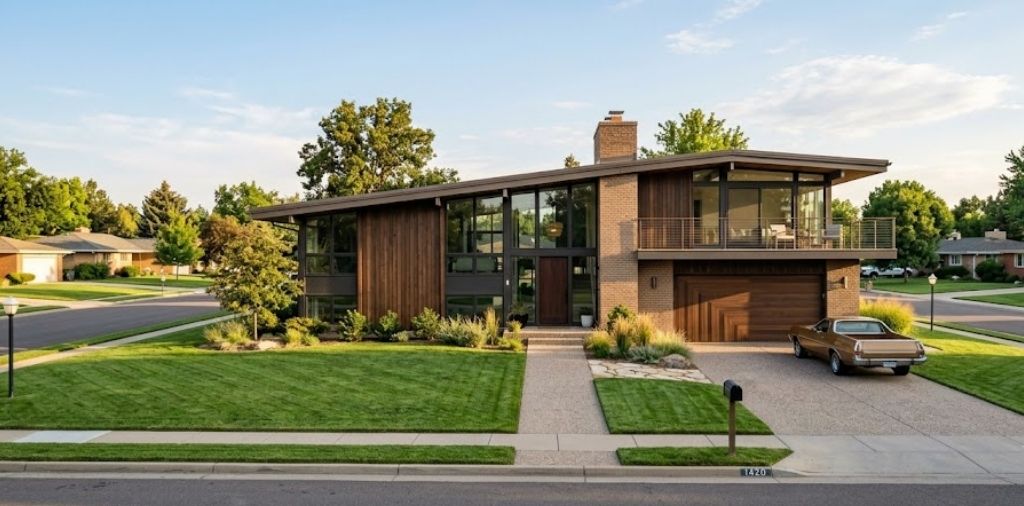
Write the biography of a Rosewood water pipe and you write the neighborhood's. Installed in the postwar buildout as bright new copper, the pride of tract construction. Commissioned into service carrying the City of Compton's well water, drawn from the Central Basin with a mineral load the city itself flags as moderately hard to very hard. Sixty-some years of that water moving through the same walls and under the same slabs, depositing scale, etching pits, thinning bends. And now the late chapters: the first green stain at a fitting, the first warm patch on a floor, the first misting pinhole inside a wall. Every house on the block owns a copy of this book, opened to nearly the same page.
What the late chapters look like
Rosewood's call log concentrates on the era's three signature endings. Pinhole failures lead: pitting corrosion breaking through as needle-fine leaks that soak insulation quietly for weeks, in walls and under slabs alike. Water heaters follow close, because the same mineral load that pits pipe blankets tank bottoms with scale, and tanks here retire early compared to softer-water towns. And the supporting cast is fixture-scale: angle stops seized by crust, hose bibs weeping at scaled seats, valves that tear their seals the first time in years anyone turns them. None of it is bad luck. It is chemistry, on schedule.
Locating in a quiet grid
Rosewood's residential quiet is a genuine diagnostic asset. Away from the corridors, the tract streets drop to a low noise floor in the evening, and that stillness is when listening-based locates do their best work here, tracing a pinhole's faint hiss through slab or stud bay without competition from traffic. We schedule the stubborn cases accordingly, and the neighborhood's repeating floor plans do the rest: hot-run routes in these layouts are old acquaintances, so the survey grid starts where the era says the pipe is instead of everywhere at once.
Repair now, plan ahead, in that order
Our Rosewood advice follows the failure count. A first pinhole gets a clean section replacement and a candid look at the exposed pipe's interior, because the cut ends tell the truth about what remains. A pattern of failures gets the pattern conversation, reroutes for repeat-offender runs, and the honest arithmetic on retiring the original copper altogether when patching turns into a subscription. Either way you get the evidence, the options, and the prices in writing, and nobody sells you a repipe your pipe has not earned.
Shared clock, shared streets
The same postwar chapters are being written next door: Sunny Cove runs the identical copper-and-slab inheritance, and the older mixed blocks toward Caldwell add pre-war material to the same water story. Whichever page your house is on, the reader to call is (424) 544-0235, any hour, with the era's habits already memorized.
Stain, hiss, or mystery bill in a Rosewood tract home?Quiet-hours locates available for the stubborn hissers.
✆ (424) 544-0235Rosewood, Compton, CA | Compton Leak Repair Pros serves this area 24/7
Rosewood leak questions
Is a green stain on copper pipe an emergency?
It is an appointment. The stain means moisture and active corrosion at that point, and while it may weep for weeks before failing, it has already told you where the era's chemistry is winning. Early calls here are small repairs.
Why do water heaters in Rosewood seem to die young?
Scale. The city's mineral-heavy supply drops sediment in every tank it heats, insulating burners and consuming anode rods early. Annual flushing stretches the life; the neighborhood's originals-era plumbing does the rest of the explaining.
Can you find a pinhole that is not showing anywhere yet?
If the meter says water is leaving, yes. Isolation narrows it to a line, and listening, thermal, or gas puts a mark on it, often before the first stain would have appeared. That is the cheapest version of this repair.