
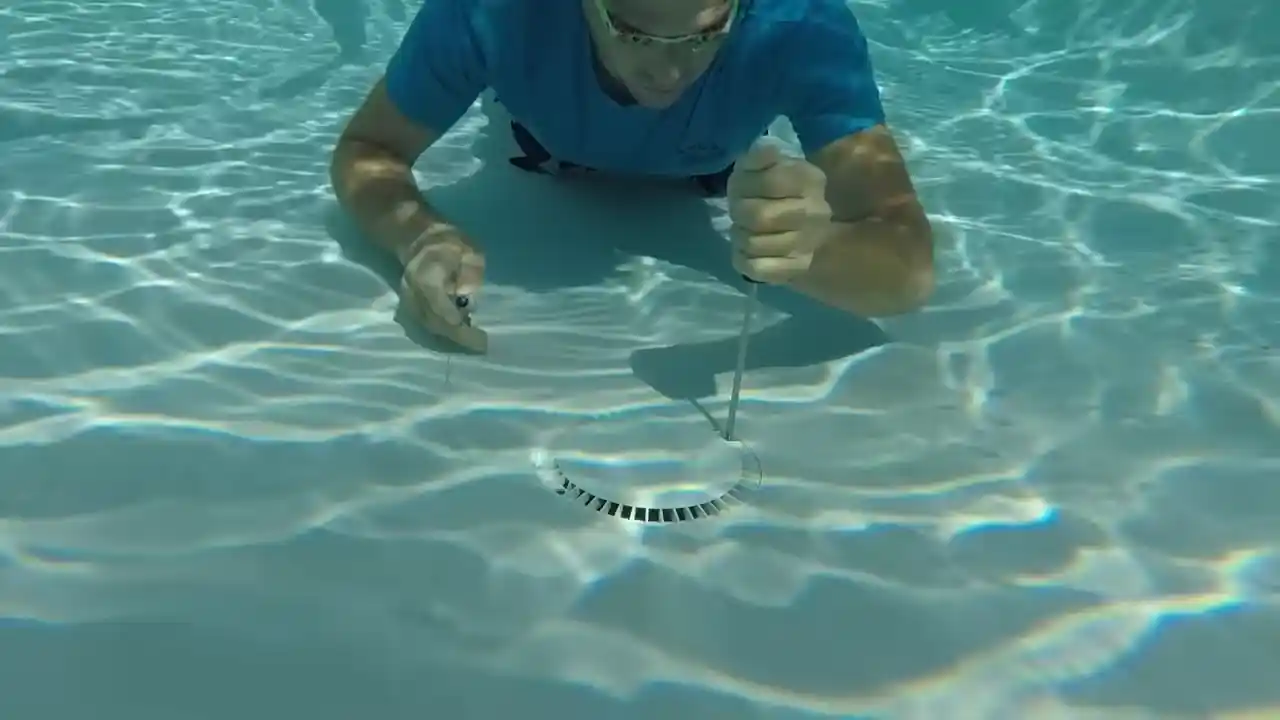
Think of an inground pool as civil engineering scaled to a backyard. A rigid concrete shell, or a vinyl or fiberglass vessel, sits in an excavation on this coastal plain's soft young alluvium, holding back tens of thousands of gallons on the inside and reactive soil on the outside. The ground settles unevenly, swells where clay pockets wet, and twitches with the region's background seismicity. The shell cannot flex with any of it. Where a portable spa or an above-ground pool fails at fittings you can reach, an inground pool fails at depth: shell cracks below the tile line, main drain seals under eight feet of water, skimmer throats cast into the deck, and plumbing buried beneath concrete you paid good money to pour. Depth is what makes this its own discipline.
The deep suspects, in order of frequency
Structural losses concentrate at penetrations, not open shell. The skimmer-to-shell joint, two dissimilar materials meeting at the waterline, leads the league. Return fittings and light niches follow, their conduits offering water a path out. Main drains fail at their seals and, in older builds, at the hydrostatic relief valve that protects the shell from groundwater. True shell cracks matter most when they pair with visible settlement or a stairstep through tile. And below the deck, the pressurized plumbing loops fail exactly as often as their age and the soil's movement suggest. Each suspect lives at a different depth, which is precisely why loss behavior versus water level is such powerful evidence.
Reading depth from the drop
An inground pool performs its own triage if you let it. With the pump off, let the level fall unattended and note where it stabilizes. Water stopping at the skimmer's bottom lip convicts the skimmer or anything above it. Stopping at the returns names them. A level that keeps falling toward the main drain says the failure lives deep, drain, deep shell, or floor plumbing. We combine that stabilization logic with dye tracing at each penetration, pressure isolation of every line, and gas tracing on the buried loops where soil and deck mute other methods, the same escalation as our general pool diagnostics, tuned for structures where half the suspects sit under water or concrete.
Repairs at depth, from seal to shell
Most inground findings resolve without draining. Skimmer throats and fitting seals repair with underwater-cure epoxies and gasket rebuilds. Main drain work happens by diver technique or, where safety and scope demand, a partial drain with the hydrostatic valve managed so groundwater cannot lift the shell, a real risk on this water table that we plan around explicitly. Buried line failures get excavated at a marked point or bypassed with a rerouted run when the deck matters more than the old path. Structural cracks get honest triage: injected and monitored where stable, referred to remediation where settlement is active, with our findings documented either way.
Tract-era pools and the long game
Compton's inground pools mostly date to the same postwar decades as their houses, backyard ambitions poured in gunite through neighborhoods like Sunny Cove and its siblings. Those shells are now sixty years into soft ground that has never once held still, riding on plumbing runs poured and glued in the same era, and they reward exactly one strategy: test precisely, repair the finding, and keep the water where you paid to put it. When the bucket math stops adding up at your pool, note the date, the weather, and roughly how fast the level falls, because loss rate is itself diagnostic at depth. Then the deep-end questions start at (424) 544-0235.
Losing water faster than the bucket says you should?Dispatch answers 24/7. Written quote before any work.
✆ (424) 544-0235Inground pool questions from Compton backyards
My pool loses water until mid-skimmer, then stops. Diagnosis?
That stabilization point is the evidence: the loss lives at the skimmer mouth or above, most often the skimmer-to-shell joint. It is among the most repairable inground findings, frequently without any excavation.
Is a crack in the plaster always a leak?
No. Plaster crazing is cosmetic and common; structural cracks pass through plaster into the shell and often telegraph through tile. Dye testing along the crack answers whether water is actually moving through it.
Can the main drain be fixed without emptying the pool?
Usually. Diver-assisted seal and cover work handles most drain repairs full. Where draining is unavoidable, groundwater management comes first, because an empty shell on a high water table can float, and that damage dwarfs any leak.
Do you test the pool and its buried plumbing separately?
Always. Vessel and lines are separate systems: the shell gets stabilization and dye work while each line holds its own pressure test. Separating them is what turns one vague loss into one specific repair.