
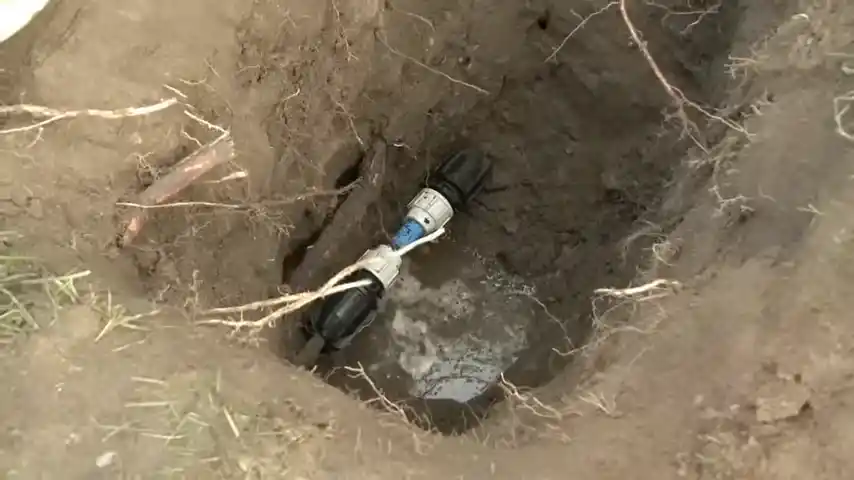
The dirt under Compton is young, geologically speaking: alluvium dropped by the Los Angeles River system as it wandered the coastal plain, fine-grained, soft, and thirsty. That soil defines underground leak work here. It absorbs escaping water instead of shedding it, so a buried failure can run for months while the surface shows almost nothing. It transmits sound poorly, muting the acoustic signature detection depends on. And with the whole city sitting flat at roughly 69 feet of elevation, gravity gives escaped water nowhere obvious to go. Finding a leak in ground like this is a discipline of instruments, not intuition.
Everything that leaks below grade
Underground is a place, not a pipe type, and four systems share it on a typical Compton lot. The pressurized water service from the meter. Irrigation mains and laterals, pressurized in zones and often the leakiest system on the property. Drain and sewer runs, which leak only in use and undermine soil rather than soaking it evenly. And pool plumbing where a backyard has one, looping under decks between vessel and equipment pad. Each betrays itself differently, so the first task is deciding which system is actually losing, by meter tests, zone isolation, and controlled fill tests, before any locating begins.
Locating through soil that eats sound
Soft alluvium forces a layered approach. We map the buried line's true route first with electronic locating, because paint marks on a wrong path waste everyone's day. Ground microphones then listen along the mapped route, and where the soil damps the signal too far, we charge the line with tracer gas that rises through the ground and pinpoints the exit with a sniffer probe. Drain-side suspects get a camera and a sonde instead. The finish line is always the same: a marked spot, a stated depth, and a repair plan scoped to that one location.
Digging in ground that will not hold a wall
Excavation here has local rules. Alluvial trench walls slump without shoring, wet-season groundwater can seep into deeper cuts near the creek corridors, and Underground Service Alert marking comes before any dig, every time. We cut the smallest hole the repair permits, stage spoil on boards to protect turf, compact backfill in lifts so the patch does not settle into a divot, and restore the surface honestly. Where a failed run makes more sense to bypass than to open, the trenchless options discussed on our service line page apply below grade too.
What you can check before we roll
Three quick observations sharpen any buried-leak call. Note whether your meter's flow indicator moves with the house valve closed; movement convicts the service line, stillness acquits it. Walk the property after two dry days and mark any ground that stayed soft, since fresh saturation traces the failure better than week-old memory. And if you have an irrigation controller, note which zones ran recently, because a wet spot that follows a zone schedule has already named its suspect. None of this is required, but callers who do it often cut an hour off the locate.
Large lots, long lines, and the Richland Farms factor
Nowhere in the city tests this work like Richland Farms, where agricultural-scale lots carry service runs and irrigation networks measured in hundreds of feet, some of it laid generations ago for orchards and livestock that shaped the neighborhood's character. Long buried lines multiply both the places a leak can hide and the cost of guessing wrong, which is exactly where precision locating pays for itself. Whether the failing line crosses a ten-thousand-square-foot lot near Compton/Woodley Airport or a full Richland Farms acre, the method holds: identify the system, map the route, mark the point, open one hole. A leak that is bleeding through an irrigation zone or seeping from an aging lateral does not stop on its own; (424) 544-0235 stops it.
Soggy ground that never dries between waterings?Dispatch answers 24/7. Written quote before any work.
✆ (424) 544-0235Buried leak questions from around Compton
How deep are buried water lines in Compton?
Service lines here typically run 12 to 24 inches down, irrigation shallower, sewer laterals deeper on their slope to the street. Frost is not a factor in this climate, so older lines can be surprisingly shallow, which helps both detection and repair.
Will you have to dig up my whole yard to find it?
No. Digging is the last step, not the search method. Locating happens from the surface with electronics, microphones, and gas tracing, and excavation is limited to the marked repair point.
Why is my ground wet but my water bill normal?
A flat bill points away from the pressurized supply and toward irrigation running unnoticed, a drain leaking only in use, or seasonal groundwater. Each has a different test, and the meter is only the first of them.
Can you find leaks under concrete driveways and patios?
Yes. Sound and tracer gas both travel through and around slabs, and lines can be located beneath them. If the failure sits under hardscape, we discuss coring versus rerouting before touching anything.