
Stand in the garage at midnight and listen. The house is asleep, no tap has run for hours, and the water heater fires anyway: the whump of the burner, minutes of heating, silence, then the whump again before dawn. A heater that runs constantly is not malfunctioning at random; it is responding, correctly, to one of three conditions. It is losing heat it already made, it is receiving instructions it should not, or it is replacing water that keeps leaving. The first two are heater problems. The third is a plumbing problem wearing a heater costume, and in this city's slab-on-grade housing it is the possibility that makes this symptom worth a systematic look rather than a shrug.
Condition one: heat loss inside the tank
The mundane and most common answer is sediment. Compton's mineral-heavy well supply drops scale into every tank it fills, and the blanket that accumulates on the tank floor insulates the water from the burner beneath it. The heater then works longer to move the same heat through the barrier, cycling more, running hotter underneath, and announcing itself with the popping and rumbling of water flashing to steam under the sediment layer. The companion evidence is the gas bill climbing while the water bill holds steady. The remedy is unglamorous: a proper flush, repeated annually in this water, and a thermostat check while the panel is off, since a failed or over-set thermostat produces the same constant-running signature by demanding temperatures the tank struggles to hold.
Condition two: bad instructions
Homes with recirculating hot water systems, the loops that deliver instant hot water to distant fixtures, can run their heaters ragged by design gone stale. A recirculation pump whose timer failed or was set to always-on keeps hot water touring the house around the clock, radiating heat from every foot of loop, and the heater dutifully replaces it. A stuck check valve in the same system lets hot and cold sides mingle with similar results. If your home has a small pump near the heater or a loop you have never thought about, its timer settings belong on the checklist before anything dramatic does.
Condition three: the water is leaving
Here is the version that earns this post its place on a leak company's blog. A heater that must constantly reheat because heated water is constantly draining away is reporting a hot-side leak, and in slab construction the classic culprit is a hot line breached under the concrete, bleeding heated water into the soil day and night. The tank refills with cold, reheats, bleeds, refills. The signature is distinctive once you know to look for it:
| Evidence | Sediment or thermostat | Recirculation issue | Hidden hot-side leak |
|---|---|---|---|
| Gas bill | Up | Up | Up |
| Water bill | Normal | Normal | Up |
| Meter with house silent | Still | Still | Moving |
| Warm spot on floor | No | Along a known loop path | Often, in a new place |
| Tank noise | Popping, rumbling | Normal | Normal |
Heater firing all night with both bills climbing?The hot-side isolation test answers the slab question in one visit.
✆ (424) 544-0235The five-minute test that splits the table
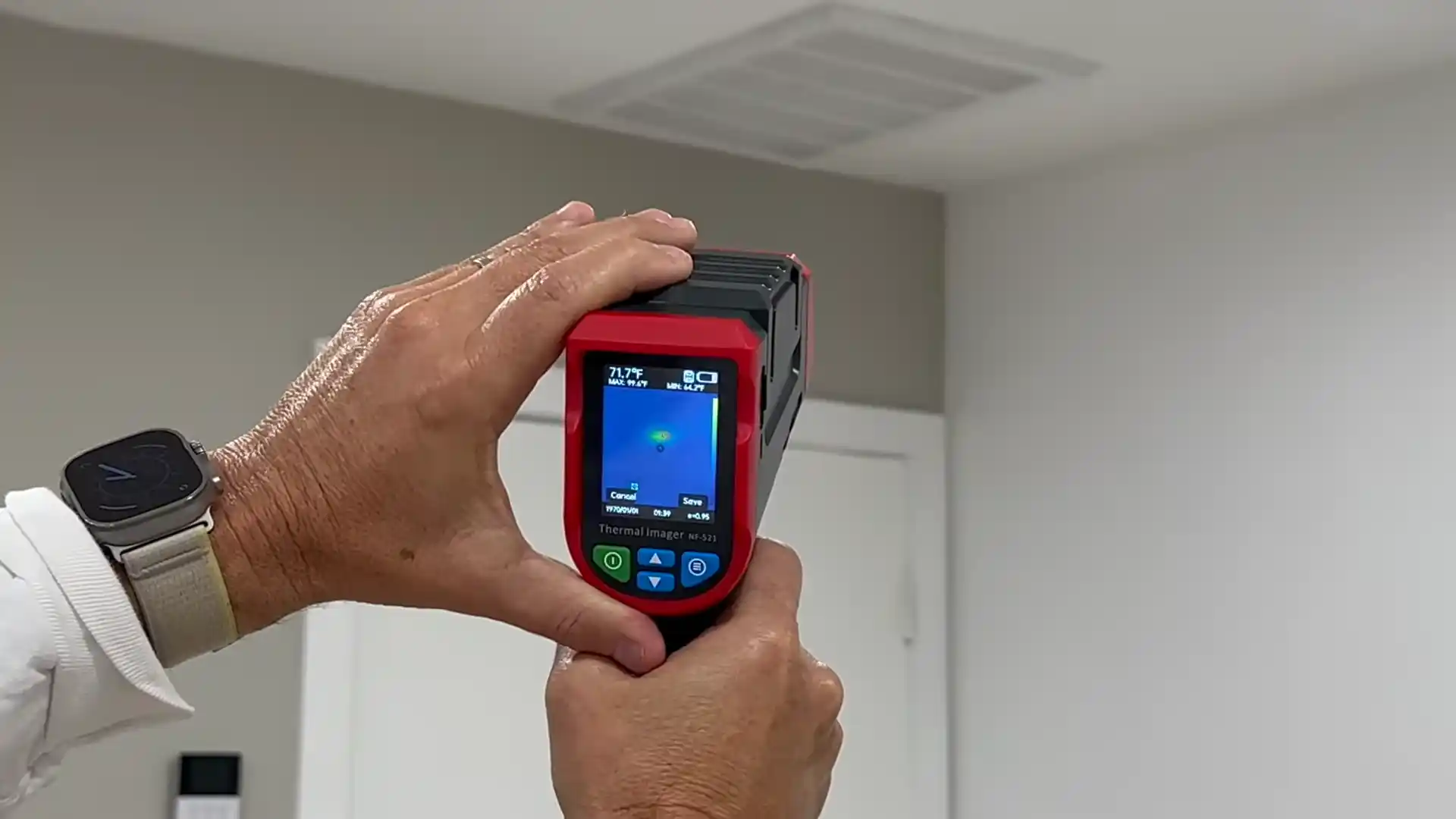
The meter settles it, as it settles most things. With every fixture and appliance off and the household still, watch the meter's low-flow indicator for five minutes. Stillness acquits the plumbing and sends the investigation back to sediment, thermostats, and timers, honest heater maintenance, cheaply resolved. Movement convicts a pressurized leak somewhere, and the constant-running heater has told you which side to suspect first: isolate the hot system, and if the loss follows the hot side, the case has effectively named itself. From there the locating work is standard practice, a thermal scan that paints the warm plume a buried hot line draws on the slab above it, confirmed acoustically before any mark is cut. The heater was never the patient. It was the witness.
Why this pattern concentrates here
Every element of the hidden-leak version is overrepresented in Compton's housing. Slab-on-grade construction dominates, putting hot runs under concrete where small failures hide. The copper in those runs is tract-era original across most of the city, decades into the pitting that this water's mineral load drives, and the same minerals simultaneously scale the tanks, so the sediment explanation and the leak explanation age in parallel and sometimes arrive together. The east-side grids and their siblings, the blocks around East Compton as much as anywhere, supply a steady stream of exactly this call: a heater that stopped resting, two bills drifting up, and a warm hallway nobody had connected to either. The elimination order above resolves it in one visit far more often than not.
What waiting costs, in this specific case
A constantly running heater is expensive twice while you wait and once more at the end. The gas burns daily. If a leak is the cause, the water bills daily too. And the tank itself pays the final installment: a heater cycling around the clock, in water that scales it aggressively, ages at a multiple of its design rate, so the household that spends six months hoping frequently buys the slab repair and a new tank together. Meanwhile a hot-side slab failure caught at the constantly-running stage, before the floor stains and the laminate lifts, is routinely a one-opening repair. The economics of this symptom are unusually lopsided toward acting early, even by plumbing standards.
Tonight's homework
Three notes turn your suspicion into a fast diagnosis: how often the heater fires in a silent hour, what the last two gas and water bills did, and what the meter's indicator does during the five-minute test. Add a barefoot lap of the floors for warm patches if the meter moves. That file, delivered to a dispatcher, converts a vague complaint into a targeted visit, and targeted visits are the short, inexpensive kind. The heater has been talking for weeks. This is how you take the statement.
The sediment flush, done properly in this water
If the elimination order ends at condition one, a maintenance flush done correctly in this water is the intervention that earns its money. Drain the tank cold, not hot: mineral deposits release more completely from cooled water and the risk to the drain valve seat is lower. Run the drain until the outflow runs clear rather than cloudy, which takes longer here than the ten minutes the manual imagines, sometimes significantly longer on a tank that has gone several years unflushed. Then inspect the anode rod on the way back in, because the same water that deposits sediment eats sacrificial anodes at a local rate, and a rod depleted to bare steel protects nothing while a fresh one buys years of tank wall. This is exactly the maintenance interval the bogleheads thread on SoCal softeners described obliquely, the one where a whole subdivision's worth of unflushed tanks failed within months of each other a decade after construction. Compton's cohort is no different. The flush is the hedge.
Calling from Long Beach instead of Compton?
Everything above applies the same way north of the city line — the diagnostic steps, the pricing model, and the same dispatch. The one thing that can differ is water source: Long Beach blends imported and local groundwater through Long Beach Water Department rather than Compton's own well system, so mineral content can vary by block. See our Long Beach service area page for coverage details, or just call — the technician on your job will confirm specifics for your address either way.
Make the heater explain itself
Note the firing pattern, run the meter test, and call with both. The elimination order in this post finishes in a single diagnostic visit.
✆ Call (424) 544-0235