
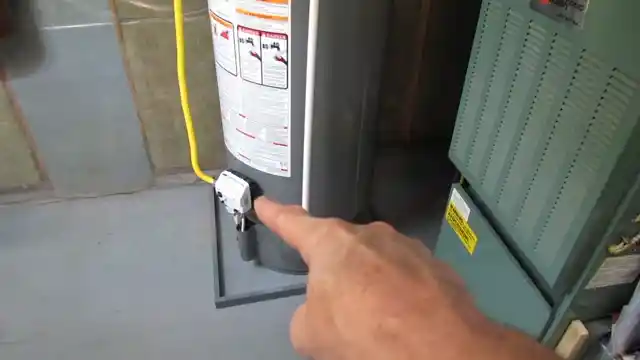
The discovery is always undramatic: a damp ring on the garage slab, a mop that has to come out twice in one week, a rust streak down the tank jacket that was not there last month. What follows the discovery is a fork in the road with a thousand dollars between its branches. One branch is a fitting or valve, fixed for modest money in under an hour. The other is the tank itself, which no repair reaches at any price, ever. Everything about handling a leaking water heater well comes down to answering that one question correctly before spending anything, and the answer is available to any homeowner with a towel, a flashlight, and twenty patient minutes.
The towel test
Dry everything. Wipe the tank, every fitting on top, the relief valve and its discharge pipe on the side, the drain spigot at the base, and the floor, until nothing anywhere is wet. Then wait and watch, checking every few minutes with the flashlight. Water reappearing at a specific point has named its author. Water seeping from under the outer jacket, or pooling on the floor with every fitting above it bone dry, has delivered the other verdict: the inner tank has corroded through, the leak lives between the steel you can see and the steel you cannot, and the heater is finished as a matter of physics rather than opinion.
The five authors, ranked by luck
| Where the water reappears | Likely author | Repairable? |
|---|---|---|
| At the flex lines or unions on top | Supply connections aged or loose | Yes, quick and cheap |
| At the side valve or its discharge pipe | Temperature and pressure relief valve | Yes, but read the next section first |
| At the base spigot | Drain valve weeping past its seat | Yes, simple replacement |
| At threaded ports on the tank body | Anode or element port gaskets | Usually, if rust has not spread |
| From under the jacket, fittings dry | The inner tank wall | No. Replacement only |
The relief valve deserves its own paragraph
A dripping relief valve is the one entry in that table that is sometimes not about the heater at all. The valve exists to release excess pressure, and a valve that weeps regularly may be a worn part, or it may be doing its job against a system running too much pressure, from thermal expansion with nowhere to go or a street-side regulator that has drifted or died. Swapping the valve without asking the pressure question treats the messenger. Any competent visit puts a gauge on a hose bib before condemning the valve, and homes whose relief valves drip nightly frequently leave that visit with a regulator or an expansion tank instead of a third replacement valve.
Puddle back after you mopped it?The tank-or-fitting question answers same-day, with the honest math attached.
✆ (424) 544-0235Why Compton tanks retire early
Manufacturers rate tanks in decades, and those ratings quietly assume average water. This city's supply is not average: the municipal wells deliver a mineral load at the hard end of the state's spectrum, and every gallon heated drops part of that load as sediment. The blanket that builds on the tank floor forces gas burners to overheat the steel beneath it, the popping and rumbling many owners hear is water flashing to steam under that layer, and the sacrificial anode rod that protects the tank gets consumed years ahead of schedule. The practical translation, visible across our service history in tract neighborhoods like Leland: unflushed tanks here commonly fail in six to eight years against nameplate lives of ten or twelve. An annual flush and an anode check every two or three years are the cheapest life extension this water allows, and they are the difference between the twelve-year tanks and the six-year ones on the same street.
The repair-or-replace math, stated plainly
Three rules cover nearly every case honestly. A fitting, valve, or port leak on a tank under about eight years old is worth repairing without hesitation. The same repair on a tank past ten years, scaled inside and rust-streaked outside, is a bridge purchase, legitimate if you need one, but it should be priced and described as buying time rather than solving anything. And a tank-wall leak at any age is a replacement, full stop, because sealants on pressurized, corroded steel are a countdown with a mess at zero. When replacement is the answer, insist on the details that decide the next tank's lifespan here: seismic strapping done properly, a drain pan where the location can flood something, a shutoff valve that actually turns, and the warranty registered before the truck leaves.
When the puddle is not the heater at all
One misdirection closes the subject. Water heaters live in garages and closets that also host other plumbing, and a puddle at the tank's base occasionally belongs to a supply line in the adjacent wall, condensation off a cold pipe in summer, or, in slab homes, moisture surfacing from below. A towel test that keeps coming back clean on every fitting, on a tank whose jacket is dry, has quietly changed the question, and the follow-up belongs to a proper diagnostic visit that tests beyond the heater before anyone buys one. Replacing a healthy tank to fix a wall leak is the most expensive wrong answer in this corner of plumbing, and it happens more than the trade likes to admit. The towel costs nothing. Use it first, then call with what it told you.
Choosing the next tank correctly
When replacement is genuine, the choice of tank determines when this conversation repeats. Capacity should match the household's actual peak, not the previous tank's nameplate, since families change and previous owners guessed. First-hour rating matters more than tank volume in this climate. And material choices affect longevity here specifically: a glass-lined tank in the city's mineral-heavy supply earns its anode rod inspection every two years and a flush every one; a tankless unit bypasses tank corrosion entirely but introduces scale in heat exchangers that must be descaled regularly or the efficiency gains disappear inside a year. Either path works with disciplined maintenance; without it, neither does. The households that extend their tank's life in this water are mostly the ones that flush annually and inspect the anode, actions that cost an hour and a few dollars, not because the manual says so but because the chemistry in this city's wells demands it. Every tank installation we do includes that conversation, because a correctly installed tank on an honest maintenance schedule, with an anode rod checked on schedule and a flush completed each year, is the cheapest water-heater story a Compton address gets to tell.
Calling from Long Beach instead of Compton?
Everything above applies the same way north of the city line — the diagnostic steps, the pricing model, and the same dispatch. The one thing that can differ is water source: Long Beach blends imported and local groundwater through Long Beach Water Department rather than Compton's own well system, so mineral content can vary by block. See our Long Beach service area page for coverage details, or just call — the technician on your job will confirm specifics for your address either way.
Get the verdict before the puddle grows
Fittings are cheap, tanks are decisive, and this water shortens every timeline. Run the towel test tonight and call with the result.
✆ Call (424) 544-0235