
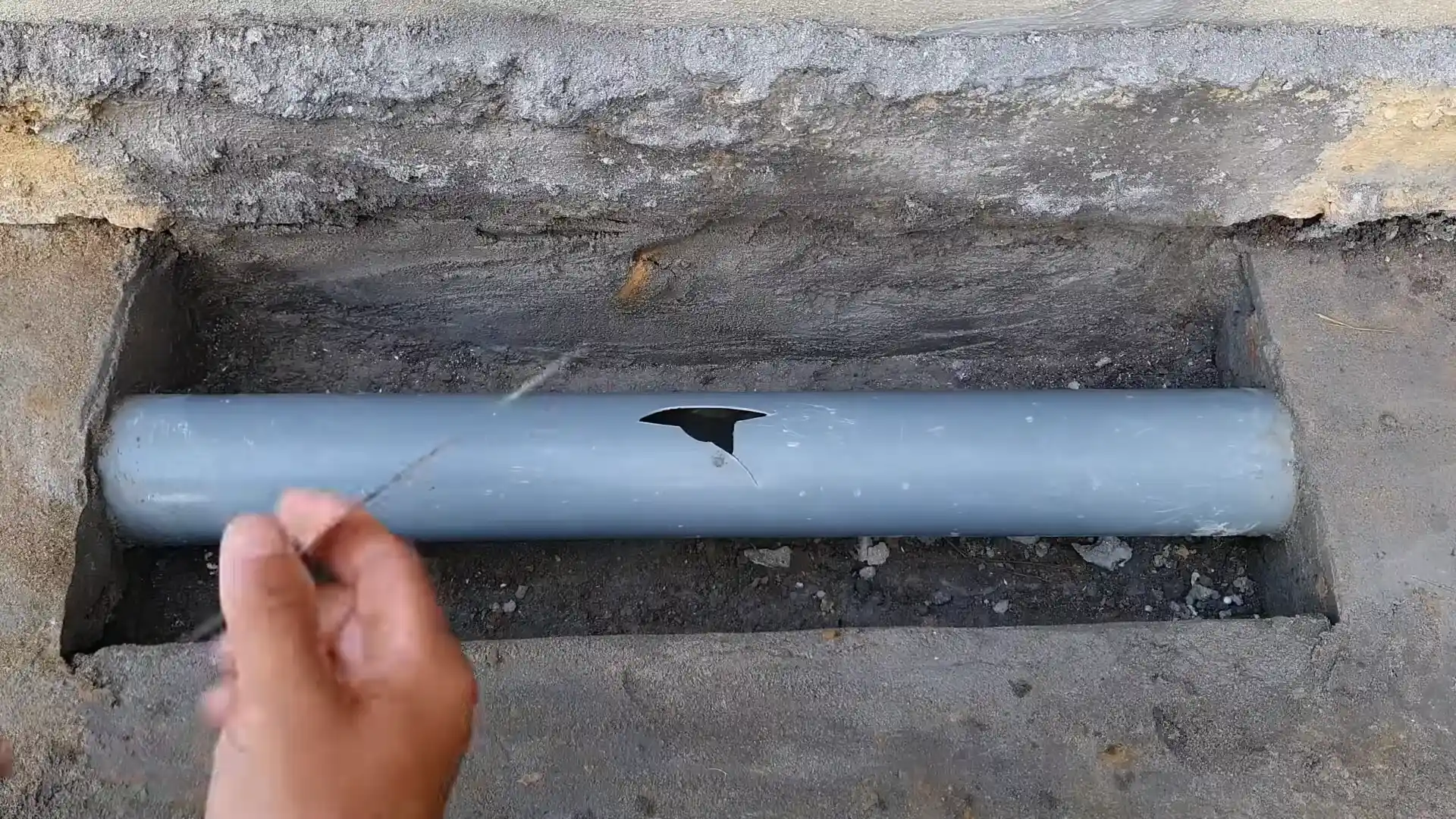
The bill arrives, and it is wrong. Not slightly wrong, not summer-watering wrong, but doubled, in a household that changed nothing. You walk the house looking for the flood that would explain it and find dry floors, dry walls, dry cabinets. This is one of the most common calls a leak company receives, and the good news is that it is rarely a mystery for long. Water that was billed went somewhere, and the somewhere is findable by process of elimination. Here is the walkthrough, in the order that eliminates the most suspects fastest.
Step one: make the meter testify
Everything starts at the meter box, usually near the sidewalk. Shut off every fixture and appliance that uses water: faucets, ice maker, washing machine, and give the toilets a few minutes of silence. Then look at the meter. Most meters serving Compton homes carry a small low-flow indicator, a triangle or star that rotates with any movement at all. With the house at rest, that indicator should be dead still.
| Meter behavior (house off) | What it means | Where to look next |
|---|---|---|
| Indicator spinning steadily | Continuous pressurized loss | Toilets first, then slab and service line |
| Indicator twitching occasionally | Intermittent loss | Toilet fill valves, ice maker, water softener cycles |
| Completely still | No pressurized leak right now | Irrigation controller, usage-based causes, drain-side issues |
That one test splits the entire problem in half. A moving meter means the loss is on the pressurized supply side and runs around the clock, which is what makes bills double. A still meter, with a bill that doubled anyway, points at things that run on schedules: irrigation, a recirculating system, or genuine usage changes.
Step two: the toilets, before anything glamorous
If the meter moves, check the least dramatic suspect first. A single worn toilet flapper can silently pass a couple hundred gallons a day into the bowl, with no puddle, no sound you would notice by day, and no evidence except the bill. Put ten drops of food coloring in each tank, wait twenty minutes without flushing, and look for color in the bowl. Households routinely discover that two tired flappers were the entire doubled bill, which is why the silent toilet leak earns its reputation as the most expensive boring problem in plumbing. Compton's mineral-heavy well supply crusts flapper seats and fill valves years ahead of softer-water towns, so local toilets fail this test more often than the national average suggests.
Step three: isolate the irrigation
Find the irrigation shutoff, typically near the meter or the backflow device, and close it. If the meter's indicator stops, your loss lives outside: a valve passing water into one zone continuously, a cracked lateral, or a mainline seep soaking soil where nobody walks. Zone-by-zone testing narrows it from there. If the property waters on a pre-dawn schedule, also open the controller and read the run times, because scheduling waste and leak waste look identical on a bill, and more than one doubled bill has resolved to a controller someone set to daily during a heat wave and forgot.
Meter moving with everything off?That single fact deserves a professional locate this week.
✆ (424) 544-0235Step four: the buried suspects
A meter that still moves with the irrigation valved off and the toilets dyed clean leaves the serious candidates: the service line between meter and house, and the supply runs under the slab. Both announce themselves indirectly. Walk the path from meter box to house and look for a strip of grass greener than its neighbors, soil that stays spongy days after watering, or a hiss at the main shutoff. Inside, hunt for warm patches on floors, the classic hot-side signature covered in depth in our warm-spot guide. These are the leaks worth professional instruments: a service line locate marks the failure without trenching the yard, and slab work follows the acoustic-and-thermal protocol that keeps openings small.
Step five: read the bill itself like evidence
Your billing history is a free diagnostic instrument. Pull the last year of statements, or the usage graph in the city's billing portal, and find the month the number stepped up. A sharp step dates the failure to within weeks, which helps enormously: a leak that began in March is not the hose bib you replaced in May. A gradual ramp over many months reads differently, often a valve or flapper degrading, or irrigation drifting upward as seals wear. Bring that history to any service call; it routinely shortens the visit.
The local multipliers worth knowing
Two Compton facts make high-bill cases more common here than the checklists written for other cities assume. First, the housing: slab-on-grade tract construction dominates, so a large share of supply pipe runs under concrete where small failures hide indefinitely. The neighborhoods built in single postwar pushes, like Sunny Cove's uniform grid, are deep into the age where those buried lines fail on schedule. Second, the water: the city's own wells deliver a mineral load that scales fill valves, pits copper, and shortens every rubber part's life, which is why the boring suspects fail early and the buried ones follow. A doubled bill here is rarely bad luck. It is usually the era arriving.
What resolution looks like
Most high-bill investigations end in one of four places: a toilet rebuild measured in small parts, an irrigation valve or lateral repair, a service line spot repair or replacement, or a slab-line locate and fix. Each has a defined cost, a written quote, and a next bill that returns to normal. The only expensive version of this story is the one where the meter spun for six more months while everyone hoped. The meter test takes five minutes tonight. Run it, note what you see, and make the call with evidence in hand.
The still-meter cases: when the bill doubled anyway
A meter that holds perfectly still with the house at rest, in a home whose bill doubled, points at three categories the checklist above only touched. The first is scheduled water: irrigation controllers are the classic, but recirculation pumps, water softener regeneration cycles, and evaporative coolers all consume on timers, invisibly, and a setting changed months ago compounds quietly across billing cycles. Walk every timer on the property and read its actual program, not the program you remember setting. The second is metering and billing itself. Meters are read on cycles, estimated reads happen, and a catch-up bill after an estimated period can look like a leak while being arithmetic. Compare the read dates and the consumption figures across your last several statements; a single spike bracketed by normal months, with normal reads resuming, often resolves to billing mechanics rather than plumbing. The city's utility office can confirm whether a read was actual or estimated.
The third category is the one nobody suspects: another party on your water. A hose bib feeding a neighbor's project, a shared or crossed line on an older lot, a tenant's above-normal usage in a rental you own, or in rare cases outright theft from an exterior spigot. If the arithmetic refuses to close any other way, an exterior-fixture audit, and locks on street-facing bibs, belongs on the list.
What a still meter rules out matters as much as what it leaves in: it largely acquits the slab lines, the service run, and every pressurized suspect that justifies excavation or concrete work. That is valuable information purchased for free. It means your investigation stays above ground, in controllers and statements and fixtures, where fixes are measured in settings and small parts. The households that get this wrong usually err in one direction, assuming a still meter means the bill must be an error, when scheduled water explains far more doubled bills than the utility ever does. Read the timers before disputing the invoice; the order matters.
Calling from Long Beach instead of Compton?
Everything above applies the same way north of the city line — the diagnostic steps, the pricing model, and the same dispatch. The one thing that can differ is water source: Long Beach blends imported and local groundwater through Long Beach Water Department rather than Compton's own well system, so mineral content can vary by block. See our Long Beach service area page for coverage details, or just call — the technician on your job will confirm specifics for your address either way.
Turn a mystery bill back into a normal one
Bring your last two bills and your meter observations to the call. Most high-bill cases resolve to one component, found in one visit.
✆ Call (424) 544-0235