
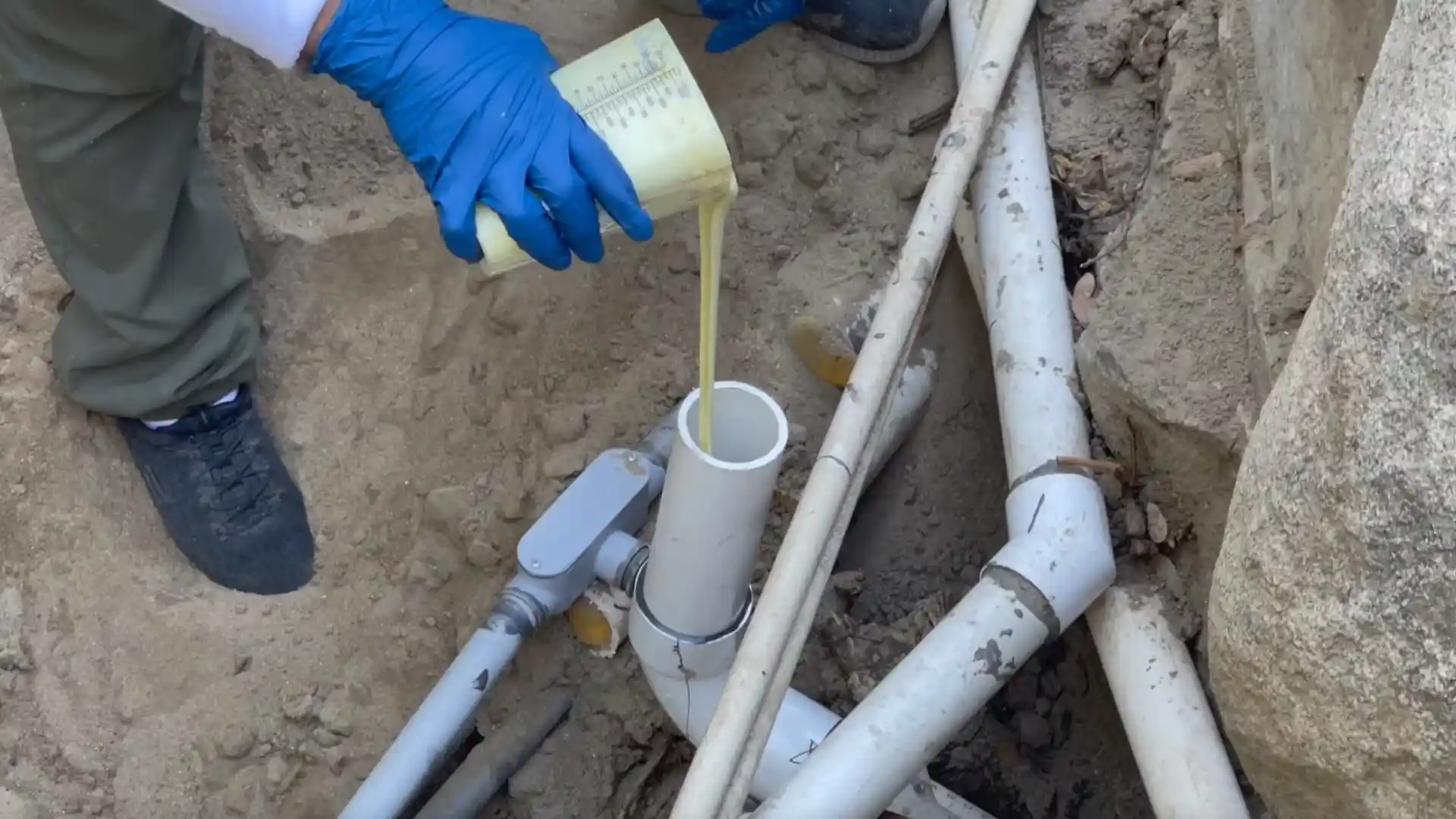
The trenchless versus dig decision is the most consequential binary in sewer repair, and the most commonly made in the wrong order. The method should follow the footage; the footage should follow the camera; and the camera should happen before any quote. In practice, homeowners frequently encounter a method recommendation before a camera has ever gone down the pipe, from contractors whose truck is loaded for one approach and whose quote reflects it. This post describes how to make the decision correctly, and what both honest methods actually cost when the total bill is counted rather than just the plumbing invoice.
What the camera is looking for
A lateral inspection camera produces a recorded run from the house cleanout to the public main, with each defect logged by distance and clock position. Trenchless candidacy is determined by that footage, not by the sales material for either method. The findings that determine the answer:
| What the camera finds | Lining candidate? | Bursting candidate? | Excavation likely? |
|---|---|---|---|
| Root intrusion at joints, pipe shape intact | Yes | Yes | Only if roots are severe |
| Cracks and corrosion, shape mostly maintained | Yes | Yes | Possibly for severe sections |
| Offset joints, moderate displacement | Marginal | Usually yes | Depends on severity |
| Belly (low spot holding water) | No (liner inherits the belly) | Yes, if path is followable | Often needed |
| Partial or full collapse | No | Sometimes, through partial collapse | Usually required |
| Sound pipe, good slope, minor root entry | Not needed yet | Not needed yet | Not needed yet |
The honest read of that table: a lateral in the classic Compton pre-war condition, clay with root intrusion at every joint and some corrosion but intact shape, qualifies for lining or bursting in a high percentage of cases. A lateral with a belly, structural collapse, or a section that has fully separated earns excavation at that segment regardless of what the rest of the run looks like. The camera is the only instrument that produces the footage needed to fill this table. Any contractor who has not run one should not be quoting a method.
The trenchless methods, distinguished from each other
Trenchless is two different technologies under one marketing umbrella, and they are not interchangeable. Cured-in-place pipe lining, usually called CIPP, pulls or inverts a resin-saturated felt sleeve through the host pipe, then cures it with heat or UV light into a new structural pipe within the old one: jointless, root-proof, hydraulically smoother than clay or cast iron, but smaller in diameter by the liner's thickness. Pipe bursting pulls a splitting head through the failed pipe from one access pit to another, fracturing the old material outward while simultaneously pulling new pipe, usually HDPE, into the void. Bursting replaces the host pipe's inside diameter fully and handles worse structural conditions than lining, but requires that the path remain followable and that nothing adjacent to the pipe prevents outward fracturing. Both methods both work. The camera chooses between them.
Camera already ran and you are comparing quotes?Ask for the total-cost comparison in writing, excavation through restoration, before signing either path.
✆ (424) 544-0235The total-cost calculation
The line-item plumbing invoice for trenchless work often runs higher than the excavation quote for the plumbing alone, and this is where many homeowners make the wrong comparison. The correct comparison is total cost, defined as: plumbing repair, plus surface restoration, plus time lost to a project that turns your yard into a construction site. For a lateral under a concrete driveway, the excavation quote's surface-restoration component alone, saw cut, dig, backfill, re-pour, and cure time, can equal or exceed the plumbing itself. For a lateral under a mature front yard with established planting, the restoration cost is harder to quantify and the loss is real. Trenchless renewal requires two small access pits, typically one at the house cleanout and one at the property line, closed and restored the same day. The surface the pipe runs under never opens. That difference is most valuable where the surface is most valuable, which in Compton's housing stock frequently means driveways, established yards, and the block of the street between cleanout and main.
What Compton laterals look like, specifically
The pre-war and early tract housing that concentrates through the city's northern blocks, including the senior streets around North Compton, runs laterals of vitrified clay and cast iron. Clay cracks at its spigot-and-bell joints under root pressure and ground movement, but the pipe body often holds its shape well into severe deterioration, which is precisely the condition that qualifies for lining. Cast iron rusts from the bottom of the pipe upward, creating a channel of rust and void that eventually loses structural integrity. Both materials, when camera-confirmed as holding shape despite defects, are textbook lining candidates. The same footage that grades the defects also calls the cases where collapse has progressed past lining's reach, and those cases get an honest excavation quote without a trenchless pitch that cannot be delivered.
The permit and inspection reality
Trenchless lateral work in Compton and the adjacent cities requires the same permits and inspection as conventional excavation, and any contractor who suggests otherwise is either misinformed or worse. The permit trail matters for three reasons: it confirms the work met code, it creates the inspection record future buyers and insurers ask for, and it protects the homeowner in any dispute over warranty or failure. Our full lateral evaluation and repair service, which combines camera footage with tracer-gas confirmation on silent leaks, includes the permit where required and the camera footage as part of the deliverable, because a trenchless renewal that lacks documentation is a repair you cannot prove happened.
The bottom line for this housing stock
Compton's pre-war and early tract laterals are among the highest-proportion trenchless candidates on our routes, because clay that has cracked and corroded still carries its shape in the great majority of cases. The city's flat lots, soft alluvial soil, and reachable lateral depths all cooperate with the method. The trenchless argument fails when the camera finds collapse, bellies, or severe offsets that the liner cannot fix or the bursting head cannot follow, and in those cases excavation gets a straight quote without apology. The decision belongs to the footage, and the footage belongs to an inspection run before any estimate changes hands. Book the camera first, compare both quoted paths on total cost including restoration, and the right method for your lateral will be a reading off the report rather than a bet on someone's sales instinct.
Scheduling a lateral repair: what to expect on the day
Both trenchless and conventional lateral repairs run on a similar day-of timeline, and knowing it helps homeowners plan. The trenchless day begins with the access pits, usually one at the house cleanout and one at the property-line connection, each the size of a doormat and typically two to three hours of careful hand and mechanical digging. Setup of the lining or bursting equipment follows, the cure or pull takes one to three hours depending on lateral length and method, and connection testing closes the sequence. Water service is off for most of the work window but restored the same day. A camera run after the repair confirms the result, and the footage is part of your file. Total disruption: one day, two small pits, restored and backfilled before the crew leaves. Conventional excavation runs longer, leaves a trench, and requires the surface-restoration phase on a separate schedule after the soil settles, typically days to weeks depending on what the trench crossed. Both paths produce a repaired lateral. The timeline difference is one of the less-discussed reasons the trenchless math improves for occupied homes with working households, and it is worth asking about explicitly when comparing quotes.
Calling from Long Beach instead of Compton?
Everything above applies the same way north of the city line — the diagnostic steps, the pricing model, and the same dispatch. The one thing that can differ is water source: Long Beach blends imported and local groundwater through Long Beach Water Department rather than Compton's own well system, so mineral content can vary by block. See our Long Beach service area page for coverage details, or just call — the technician on your job will confirm specifics for your address either way.
Camera first, method second, quote in writing
We run the camera, state the findings, and price both paths where both qualify. No method is sold before the footage earns it.
✆ Call (424) 544-0235