
It usually starts with reaching for the dish soap. The bottle's base is wet. Then you notice the shelf paper lifting at a corner, a gray bloom on the particleboard, the faint sweet-musty smell every plumber knows from ten feet away. Nobody watches the inside of a sink cabinet, which is exactly why sink leaks are found late: the door does the leak's hiding for it. By discovery day, the question is rarely whether something is leaking. It is how many of the half-dozen candidates under there are guilty, and how much of the cabinet floor is coming out with the repair.
Six suspects in every cabinet
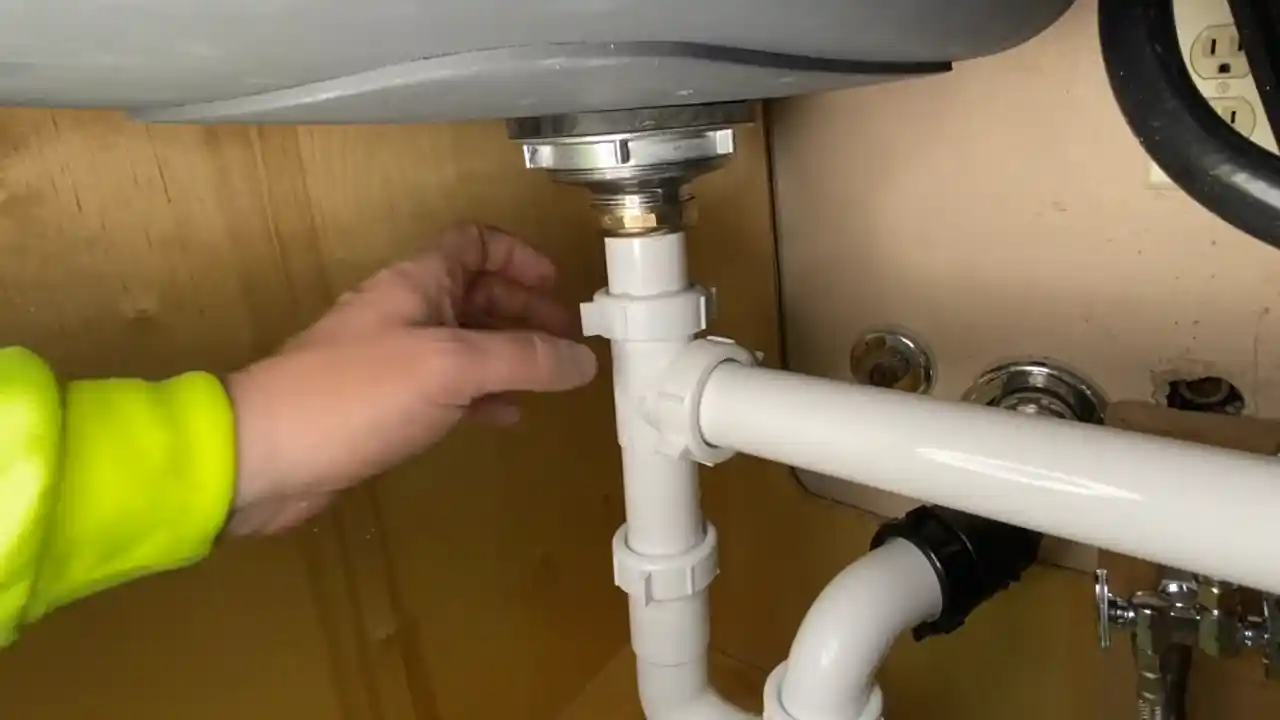
Under a typical Compton kitchen sink live six independent water systems, any of which can be your leak. The hot and cold supply stops and their flexible connectors, working under constant pressure. The faucet's underside, where a failing fixture drains its evidence down the supply lines. The basket strainer seal at the sink bowl. The trap and drain arm, leaking only when water runs. The dishwasher's drain loop, tied into the same assembly. And where one is installed, the disposal's body and connections, a machine that vibrates its own fittings loose over years of service. Six systems, three different leak behaviors: constant, only-in-use, and only-when-that-appliance-runs.
Isolation beats guessing
We dry everything, then test the suspects in behavioral order. Supply-side components get checked under standing pressure with the fixture off, because they alone can leak around the clock. Then the drain side gets a controlled fill-and-release, with paper towels staged at each joint to catch the first drop and name it. The dishwasher and disposal each get run under observation. Ten disciplined minutes usually convict one or two components precisely, which matters, because the lazy alternative, resealing everything and hoping, is how the same cabinet gets soaked twice.
Repairs, and the cabinet-floor question
Component repairs are specific once named: new stops and braided connectors, a rebedded strainer, a rebuilt trap in materials that match the drain, a re-hung dishwasher loop, disposal reseal or replacement. The judgment call is what the water already did. Swollen particleboard does not recover, and a cabinet floor that stays damp grows mold under the new plumbing. We give you a straight read on whether the base needs replacing and moisture readings to back it, then coordinate so the plumbing work and any cabinet repair land in the right order.
Hard water, old stops, and Compton's kitchens
Two local facts stack the odds against sink cabinets here. The city's own well supply, hard enough that its water department flags it in every quality report, crusts valve stems and strainer threads until seals that should turn freely tear instead. And the housing stock means original chrome supply stops from the sixties are still in service by the thousand, seized open, waiting to shear the first time someone needs them closed in an emergency. Around the Walnut Park border and the older kitchens citywide, we replace those stops on sight during any repair, because a shutoff that will not shut is a flood with a schedule. One call to (424) 544-0235 and the cabinet stops keeping secrets.
A closing habit worth adopting: empty the cabinet once a season and run your hand along the back seam and the trap joints. Thirty seconds of touch finds what the eye misses in a dark cabinet, and a leak caught at the first damp fingertip is a parts repair instead of a cabinet rebuild. Owners who do it tend to call us years apart instead of months.
Musty cabinet or a warped shelf under the sink?Dispatch answers 24/7. Written quote before any work.
✆ (424) 544-0235Sink questions from under Compton counters
Why does my sink only leak sometimes?
Because most sink components only see water in use. A trap joint leaks during drainage, a dishwasher loop during its cycle, a strainer seal under a full basin. Intermittent means drain-side or appliance-side; constant means supply-side. That one distinction is half the diagnosis.
Is a slow drip under the sink really urgent?
For the plumbing, no. For the cabinet, yes. Particleboard wicks and swells within days, and mold follows moisture in a closed cabinet fast. Early calls are cabinet-savers more than pipe-savers.
Should the supply valves under my sink be replaced proactively?
If they are original multi-turn stops from decades past, yes, during any other work in the cabinet. Quarter-turn ball stops cost little, and a working shutoff is what turns a future failure into an inconvenience instead of a kitchen flood.
Can a leaking sink damage more than the cabinet?
Absolutely. Water finds the cabinet's back seam and enters the wall cavity or wicks under flooring, and on second-story sinks it stains the ceiling below. Moisture readings tell us whether the leak stayed in the cabinet or traveled.