
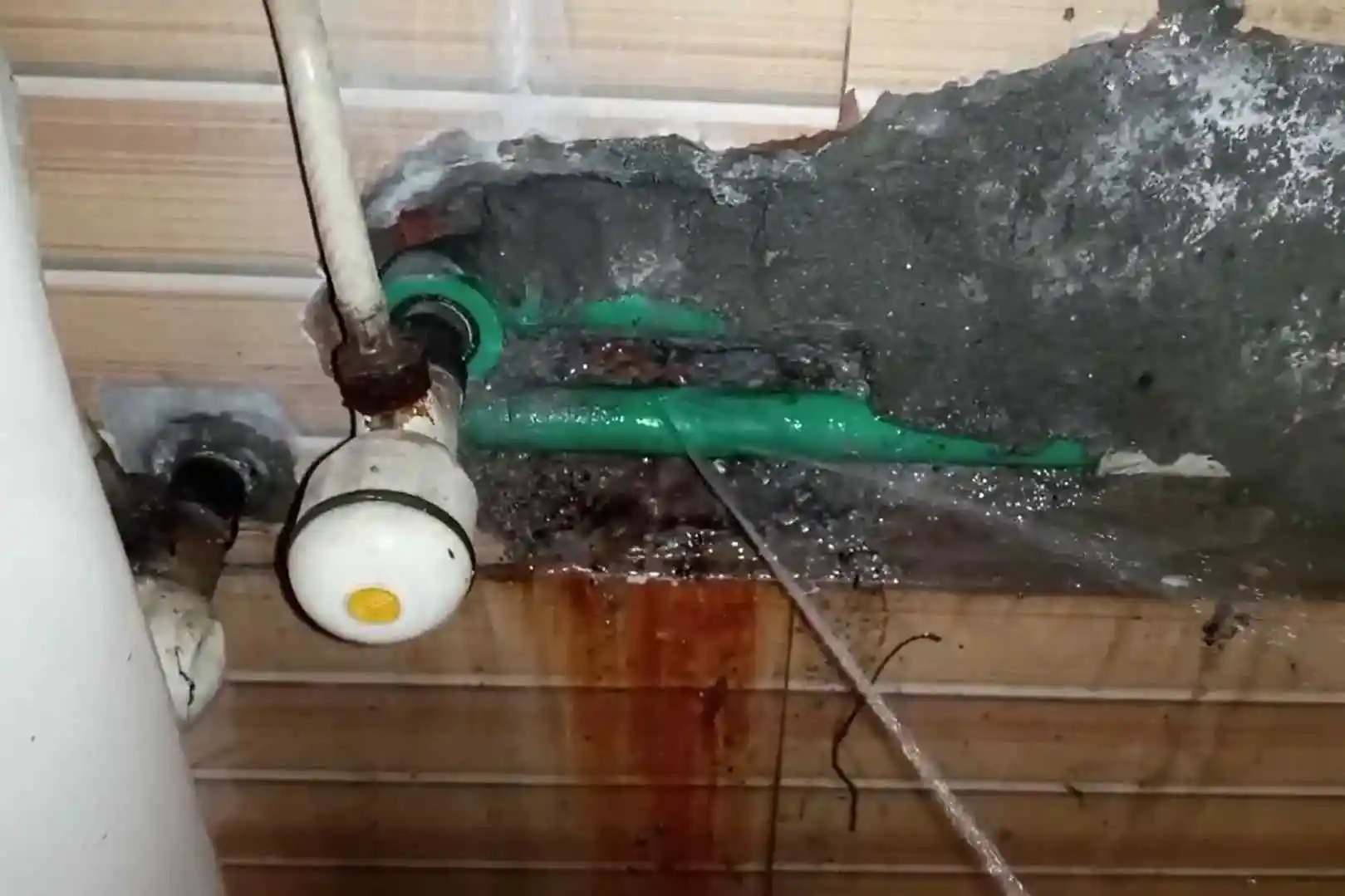
PVC does not rust. It shrugs off Compton's mineral-heavy well water, ignores the calcium that eats copper, and never develops a pinhole. So why is yours leaking? Because plastic trades corrosion for a different set of enemies: brittleness with age and sun, cracked solvent joints, fittings stressed sideways by soil movement, and the occasional shortcut by whoever glued it together decades ago. In a city where PVC carries the drains of every home built or remodeled since the seventies and nearly all the irrigation in the ground, those failure modes keep us busy year-round.
Where PVC actually fails
The joints, overwhelmingly. A solvent weld done with too little primer, too little cement, or too much haste can hold for twenty years and then let go without warning. Threaded connections crack from overtightening, often the day they were installed, weeping slowly ever since. Sun-exposed runs at pool pads and above-ground irrigation turn chalky and brittle, snapping under pressure spikes. And underground, this coastal plain's soft alluvium settles unevenly, loading buried fittings until an elbow or tee splits along its seam. The pipe between joints is rarely the culprit. The connections are.
Finding plastic leaks when sound will not help
PVC muffles the acoustic signature that makes metal leaks easy to chase, so detection shifts methods. Pressurized irrigation gets zone-by-zone isolation and flow measurement to convict the leaking circuit, then tracer gas or close-range ground sensing to mark the point. Drain-side PVC gets tested the way drains demand, by controlled fill and camera, since a drain line leaks only while something runs through it and never moves the water meter at all. Moisture mapping bounds indoor failures behind cabinets and walls. Different physics, same finish: a confirmed mark before any cutting.
Repairs that outlast the original glue
We cut failed joints out entirely rather than smearing sealant over them, rebuild with primed and cemented fittings rated for the service, and support buried replacements on compacted bedding so soil settlement does not repeat the failure. Where a run has cracked more than once, we look upstream for the real cause: water hammer from fast-closing valves, pressure above spec at the regulator, or a tree root levering the line. On irrigation, chronic joint failures often justify re-plumbing the sprinkler manifold and its aging valves in one pass rather than chasing them apart one season at a time.
Winterizing is not the issue here. Sun and pressure are.
Compton never freezes, so PVC here skips the cracked-line spring that colder regions dread. Its local killers are ultraviolet exposure, which turns exposed pipe chalky and brittle within a decade, and unregulated pressure spikes that hammer weak joints. Painting exposed runs, shading pool pad plumbing, and verifying the regulator are the three cheapest years you can add to a plastic system in this climate.
Compton's PVC map, from Cressey Park to the parkways
The newer the neighborhood, the more plastic it carries. The condo and infill construction around Cressey Park and Esprit runs PVC drains throughout and PEX or copper supply above them, so leaks there skew toward drain joints and irrigation. Older tract blocks carry PVC mostly outdoors, in sprinkler systems retrofitted over decades, and along the parkway strips near Gateway Towne Center where commercial landscaping runs big zones on old glue. Wherever yours sits, the pattern holds: PVC gives little warning and no rust stain, so the first sign is usually water where it should not be. When that day comes, (424) 544-0235 puts a mark on the failure instead of a shovel in the dark. Chronic zone losses that surface as mystery wet spots usually trace back to a buried irrigation failure rather than the service line, and we test in that order.
Sprinkler zone flooding or a drain stain spreading below?Dispatch answers 24/7. Written quote before any work.
✆ (424) 544-0235PVC questions from Compton yards and remodels
Can you glue a cracked PVC fitting back together?
Not durably. Solvent cement fuses clean mating surfaces, not crack faces under stress. The lasting repair cuts the failed fitting out and rebuilds the joint with new material, which takes little longer and does not come back.
Why does my PVC only leak when the sprinklers run?
Because that zone is the only time the line sees pressure. Zone-only leaks are convenient diagnostically: they tell us the failure lives in that circuit, downstream of its valve, and the search area shrinks accordingly.
Does Compton's hard water affect PVC at all?
Not the pipe wall, which is immune to mineral corrosion. Scale can build at emitters, valves, and low-flow fittings, and pressure problems caused elsewhere in the system still stress plastic joints, so PVC systems here are not maintenance-free, just corrosion-free.
Is old gray poly pipe the same as PVC?
No, and it matters. Gray polybutylene and early poly irrigation lines are a different, failure-prone material we still find in older yards. If we open a repair and discover poly, we tell you plainly, because section repairs on it rarely hold.