
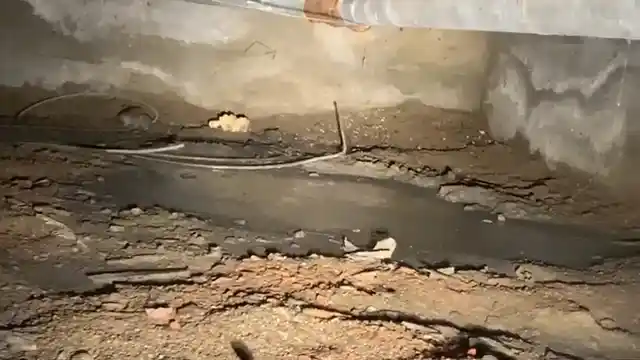
Every raised-foundation home in Compton has a room its owners have never entered: eighteen to thirty inches of dark between the soil and the floor joists, threaded with every supply line, drain, and gas pipe the house owns. The crawl space is where the city's pre-war housing keeps its truth. A supply drip that a wall would hide for months lies in plain sight down there as a stalactite of mineral crust. A drain seep announces itself as a damp crater under the bathroom. And because nobody looks, the record accumulates for years: rusted lines, wet soil, sagging insulation, each one filed away under the floor until a musty smell or a cupping hardwood plank finally sends someone crawling in with a flashlight. Usually us.
What a crawl space inspection actually covers
We go in with lights, instruments, and a checklist tuned to what fails under old houses. Supply lines get traced end to end, and in this housing stock that means reading the mixed generations of pipe the decades installed: original galvanized crusted at every joint, copper spliced in during the sixties, PEX from the last remodel, all sharing hangers. Drain runs get checked at hubs and slopes while a helper runs fixtures above. Soil gets read for moisture patterns, fresh wet versus old stains versus the seasonal dampness this coastal plain's high water table pushes up in the December-to-March rains. And the structure gets an honest glance: joists over chronic leaks, subfloor under bathrooms, insulation that moisture has already dropped.
Leak, groundwater, or ventilation: three different problems
Not all crawl space moisture is plumbing, and treating it as such wastes money. A plumbing leak wets a specific place and follows use or pressure. Groundwater and drainage moisture arrive seasonally, broadly, and worst near the perimeter after rain, a pattern that points at grading and gutters rather than pipe, and sometimes at the foundation's own relationship with the soil. And a crawl space that is merely humid, condensing on cold pipes and ducts in summer, has a ventilation problem a vapor barrier and airflow fix. Our report names which of the three you have, with readings, because the repairs share nothing but the dirt they happen over.
Repairs made where the house was built to allow them
The crawl space's one mercy is access. Repairs that would demand demolition in a slab home happen here with a creeper and patience: failed galvanized sections replaced in modern pipe, drain hubs rebuilt, whole supply runs rerouted overhead along the joists where the old line has nothing left. We re-hang lines at proper intervals, insulate what sweats, bag out debris, and photograph everything, because you deserve to see the room you own without crawling it yourself. Where moisture has soaked soil or structure, drying and vapor-barrier work gets scoped honestly alongside the plumbing.
Farmhouses, bungalows, and the pre-war belt
The crawl space beat runs through Compton's oldest fabric: the bungalow blocks near the historic core and the farmhouse stock of Richland Farms, where homes that predate the tract era sit on raised foundations above the same soil their orchards once drank from. Those houses have carried four generations of plumbing on the city's mineral-heavy well water, and their undersides tell the whole story to anyone willing to look. We are. Book the flashlight visit before the floor tells you first: (424) 544-0235. Most inspections finish inside an hour, and the photo set alone, a documented tour of a space you have never seen, tends to be worth the call.
Musty floors, cupping hardwood, or a vent that breathes damp air?Dispatch answers 24/7. Written quote before any work.
✆ (424) 544-0235Crawl space questions from Compton's older homes
How do I know if my Compton home even has a crawl space?
Look for foundation vents low on the exterior walls and an access hatch in a closet floor or exterior skirt. Most pre-war and some early postwar homes here have one; the later slab tracts do not.
There is standing water under my house after rain. Is that a leak?
After a storm, more often drainage than plumbing: this flat coastal plain drains slowly and winter groundwater rises. Water present in dry months, or localized under a fixture, points back at pipes. The moisture pattern tells us which.
Is it safe for me to inspect my own crawl space?
With a good light, gloves, and caution, a look from the hatch is fine. We would rather you not crawl far: wiring, nails, occasional wildlife, and unknown air quality are real. The photos we take do the crawling for you.
Can old galvanized under the house be replaced without opening walls?
Largely yes, and that is the raised foundation's gift. Horizontal runs replace or reroute from below; only the short risers into walls need interior access, usually small and patchable.